Thursday, November 17, 2016

Published 12:14 PM by with 0 comment

LAMMA ISLAND

LAMMA ISLAND 

Lamma is situated only 3km off the south west coast of Hong Kong Island from which it is separated by the East Lamma Channel. The island is Hong Kong's third largest being about 6km in length and quite narrow being about 2.5kms at its widest point. Apart from a large power station built in 1972 on the western side of the island which supplies energy to Hong Kong Island and a recent solitary wind turbine the island is virtually unspoiled and something of a contrast to its outlying island neighbours Cheung Chau and Peng Chau. It has a population of around 5,000 of which the vast majority live in the two main villages, Yung Shue Wan and Sok Kwu Wan. Lamma in Chinese means "the southern tree branch" and Lamma Island was originally known as "Bok Liu Chau". The island is very rural with some rugged scenery with granite hills dominated by the 353 metre peak of Mount Stenhouse (Shan Tei Tong) in the south, as well as tiny settlements and quiet beaches. As with its neighbouring islands there are no cars, just bicycles, motorised carts and miniature emergency vehicles.


Lamma has a very “relaxed” feel to it with a slow pace of life which has made it popular with people seeking cheap accommodation and an alternative bohemian type of lifestyle. There are many western ex-pats in the community, some of whom have lived there since the “hippy/flower power” days of the late sixties/early seventies. The island is well known for its seafood restaurants which are popular with locals, visitors and corporate guests of some of Hong Kong’s leading businesses.


GETTING THERE – Lamma is served by ferries from Central Pier 4 on Hong Kong Island and from Aberdeen on the south side of Hong Kong Island. There are separate services to both of the main villages on the island, Yung Shue Wan and Sok Kwu Wan. The journey time is 27 minutes to Yung Shue Wan and 30/40 minutes to Sok Kwu Wan. Vessels are monohull and some of the boats have a small outside canopy-covered area at the rear of the upper deck.
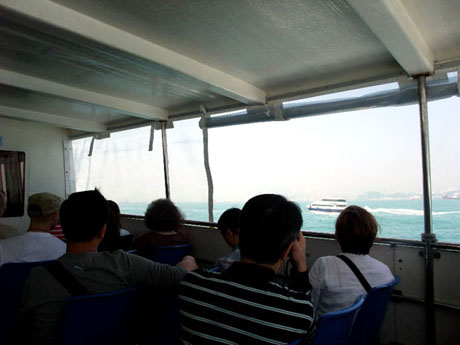

Some boats used on the ferry service to Lamma have an outside canopy-covered deck enabling passengers to enjoy the busy harbour activity on the journey.

There is also a ferry service operating between Aberdeen and Yung Shue Wan via the small village of Pak Kok Tsuen on the northern coastline of Lamma. Since August 2008 this service has been operated by Tsui Wah Ferry Service (HK) Ltd and the journey from Aberdeen to Yung Shue Wan takes about 40 minutes (25 minutes to Pak Kok Tsuen).
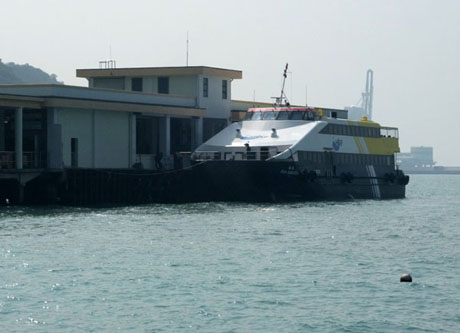

Ferry from Central at Yung Shue Wan Pier

There is also a kaido service between Aberdeen, Mo Tat Wan (a small village on the eastern coast of the island) and Sok Kwu Wan. There are thirteen sailings each way during Monday to Saturday and nineteen on Sundays and public holidays. The journey time to Sok Kwu Wan is 30 minutes (or 23 minutes to Mo Tat Wan).
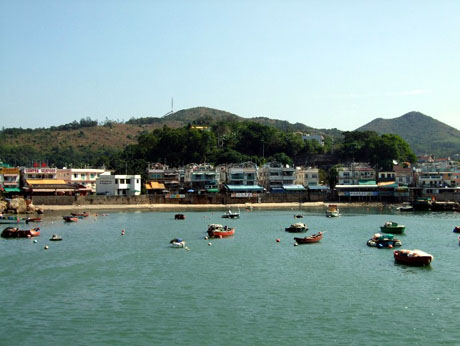

Yung Shue Wan

FAMILY TRAIL – a popular family trail across the island links the two largest villages, Yung Shue Wan in the north and Sok Kwu Wan in the south. The 3km trail which is along concrete paths all the way takes about 60/70 minutes to walk and provides a wonderful opportunity to explore the island scenery. From Yung Shue Wan take the path around the harbour side and through the narrow and congested main street lined with seafood restaurants and small shops.
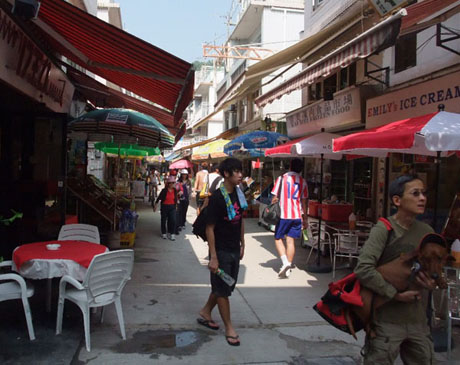

Yung Shue Wan's busy main street

By a prominent “Shell Gas” sign take the signed path on the left. The path leads past more shops and residential dwellings and shortly after crosses a wide service road (which runs between the power station, service reservoir and Lamma Winds). The built-up area now disappears as the path crosses marshland, tall vegetation and the rather delapidated village of Long Tsai Tsuen.
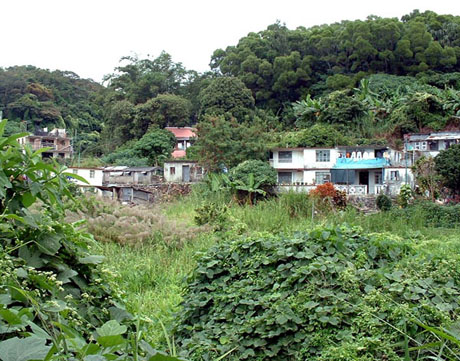

Long Tsai Tseun

After Long Tsai Tsuen the path begins a gentle ascent before crossing another service road leading to the power station before descending past the former Lamma Police Post to Hung Shing Ye Beach.
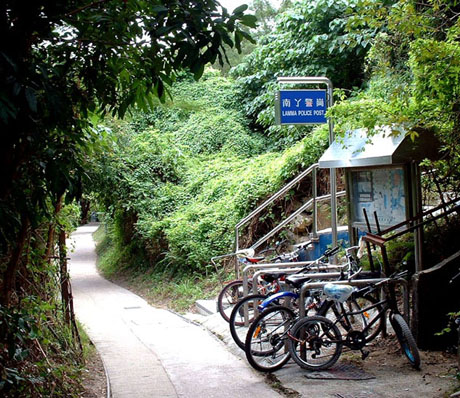

The trail passes the Lamma Police Post (now closed)

Hung Shing Ye is a popular sandy beach partially sheltered by trees and a favourite haunt of windsurfers but sadly spoiled by being in the shadow of the power station. There is a beach café, barbecue area, changing rooms, showers and toilets. The beach becomes busy during weekends and holidays.


Hung Sing Ye Beach looking south. However the view in the opposite direction is spoiled by nearby Lamma Power Station

From this point the trail becomes much more tranquil and climbs quite steeply to a pavilion and viewpoint with panoramic views of the coastline, grassland, rock strewn hills and Mount Stenhouse ahead. The trail continues along a ridge and soon after passing the intersection with a path up to the Lamma Youth Camp, Sok Kwu Wan Bay and its numerous fish farms, Sok Kwu Wan village and the south side of Hong Kong Island come into view across the East Lamma Channel.
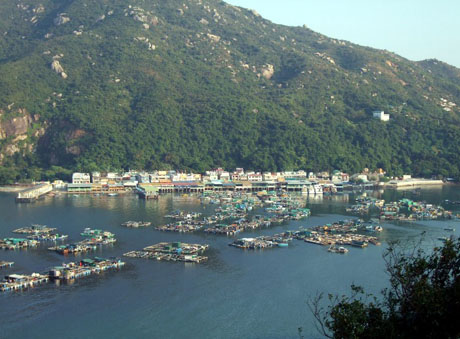

Sok Kwu Wan from Family Trail above Lo So Shing

Below the trail is a disused cement works, a minor blemish on an otherwise quite idyllic scene. Shortly a path off to the right of the trail leads down to Lo So Shing Beach, set in a scenic cove and well worth a visit. This beach is also sandy and has showers and changing facilities and there is a barbecue area with solar-powered floodlighting located on a small rocky outcrop on the edge of the bay.
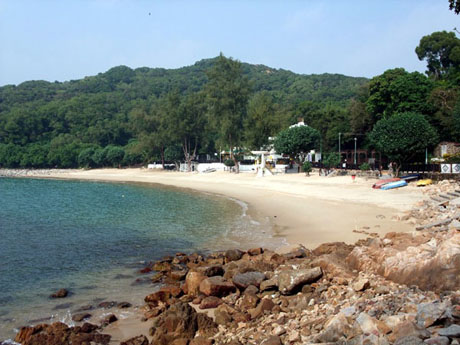

A short diversion from the main trail leads to Lo So Shing Beach

The main trail descends to Lo So Shing village with its tiny houses and past a pavilion before passing an abandoned school and following the bay alongside a sandy beach.
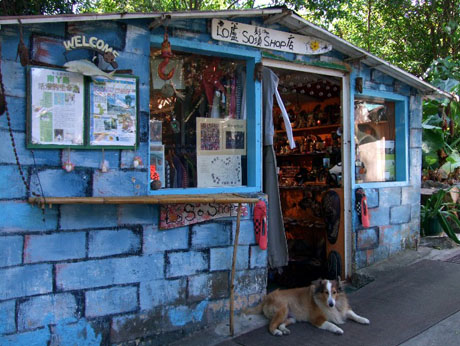

Lo So Shop, Lo So Shing

Beyond Lo So Shing the trail passes Kamikaze Cave where during World War II the occupying Japanese troops are reputed to have hidden speedboats with which to make a suicidal escape when the Allied forces reoccupied Hong Kong.
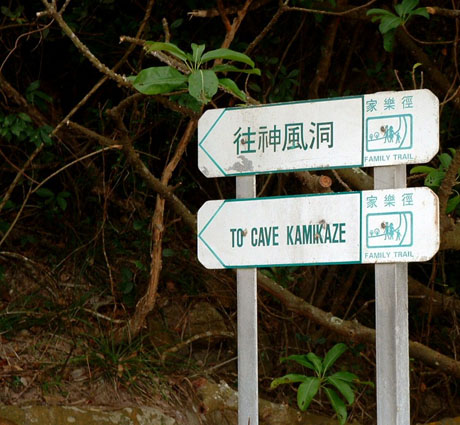

The entrance to Kamikaze Cave
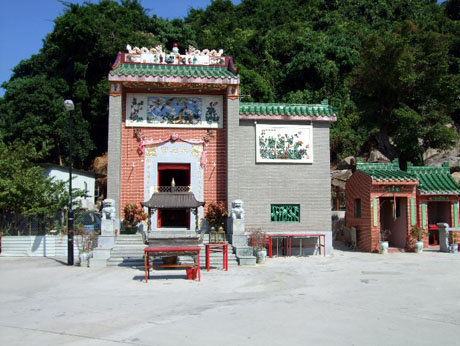
The trail follows a narrow causeway across mudflats and a small inlet before reaching the Tin Hau Temple at the entrance to Sok Kwu Wan. The temple was built in 1826 but following a fire in 2004 has been splendidly refurbished. This is one of three Tin Hau Temples on Lamma, the others being at Luk Chau Shan and Yung Shue Wan.


Tin Hau Temple, Sok Kwu Wan

Sok Kwu Wan’s main street is lined with canopy covered waterside seafood restaurants of which the best known is Rainbow Seafood Restaurant which several premises, having expanded to take over some of the other restaurants in the village These restaurants are extremely busy at weekends and are popular destination for entertaining corporate clients of some of Hong Kong’s major businesses. Just beyond the restaurants is the pier for ferries to Central and Aberdeen

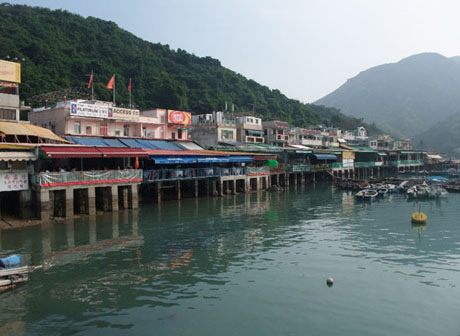
Seafood restaurants, Sok Kwu Wan Main Street


Sok Kwu Wan waterfront is lined with the balconies of seafood restaurants

LAMMA FISHERFOLKS VILLAGE – located on a raft in the bay amongst the fish farms lies Lamma Fisherfolk’s Village, opened in 2007 to showcase the local fishing culture and history of the fishing industry in Hong Kong. The village comprises an authentic fishing junk, traditional dragon boats, feeding rafts, exhibition hall, themed folklore booths, fishing rafts and dwellings. There is an opportunity to witness and participate in various activities including water bombing and net throwing, sail raising and “funny” hookless fishing. The village is open daily from 10am to 7pm. Tickets can be obtained from the booth on the main street amongst the seafood restaurants and fast boats from Sok Kwu Wan Public Pier number 1 (not the ferry pier) transport visitors to the village in about one minute. There are two types of ticket, Premium Package HK$98 (HK$78 child and seniors) which includes game tickets, snacks and a discount voucher or Full Day Ticket HK$60 (HK$50).
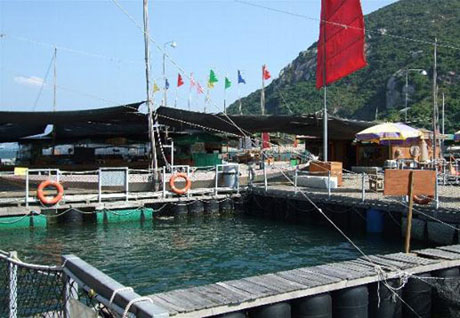
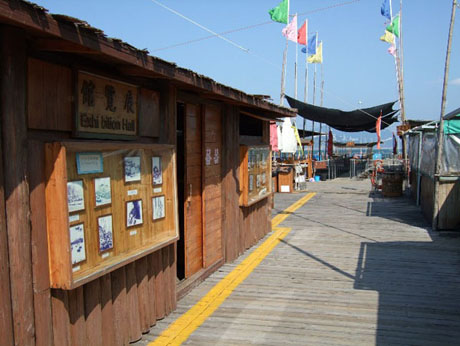

Lamma Fisherfolks Village, Sok Kwu Wan

EXTENDED FAMILY WALK – some of the best scenery on Lamma lies beyond Sok Kwu Wan and continuing on Family Trail for about one hour leads past more beautiful bays, tiny and partially abandoned villages and the lower slopes of Mount Stenhouse before completing a circular route to emerge by the Tin Hau Temple at Sok Kwu Wan. Leaving Sok Kwu Wan the path climbs above the bay with its many fish farms then heads around the rural tree lined headland before reaching Mo Tat New Village which has several modern dwellings and holiday accommodation. A path and steep steps lead down to Mo Tat Wan, another secluded bay with beachside Mediterranean restaurant. From the pier at the end of the bay there is a kaido ferry service to Sok Kwu Wan and Aberdeen operated by Chuen Kee Ferry Ltd.
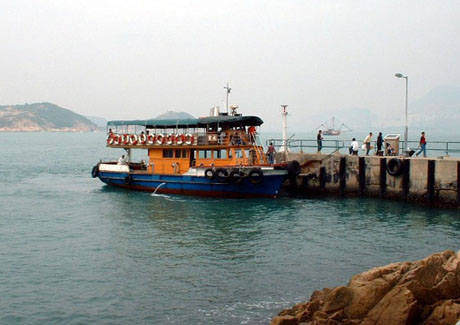
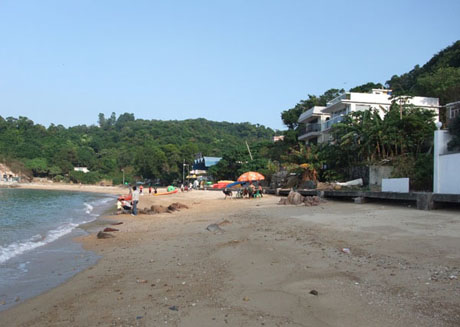
Kaido Ferry from Aberdeen to Sok Kwu Wan at Mo Tat Wan Pier


Beach and The Bay restaurant (blue roof in distance) at Mo Tat Wan

Continuing along the trail the path leads through Mo Tat Old Village then drifts away from the coastline before reaching the remote and mostly abandoned tiny village of Yung Shue Ha at one end of a beautiful unspoiled sandy beach in Shek Pai Wan Bay.
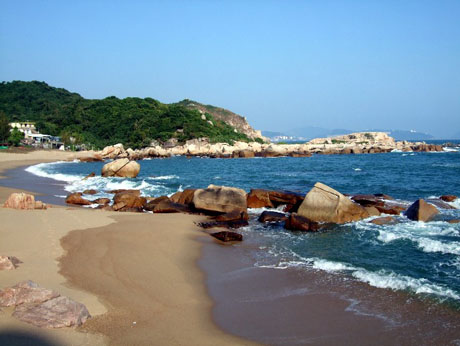

Shek Pai Wan

At the other end of the bay the trail turns inland to Tung O, another mostly abandoned tiny village which is where the film star Chow Yun Fat was born and raised and members of his family still live on the island.
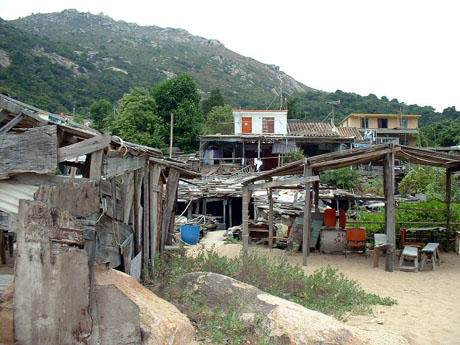

Tung O, partially abandoned village

A path off the trail just before the start of Tung O village leads across marshland to Sham Wan where the endangered green turtles come ashore to lay eggs on the sands during July to August (visitors should stay away during this time). Past Tung O the trail climbs up to a shelter and pavilion at the foot of the slopes of Mount Stenhouse and then descends quickly via a cemetery and a flight of steps which emerge near to the Tin Hau Temple at Sok Kwu Wan.

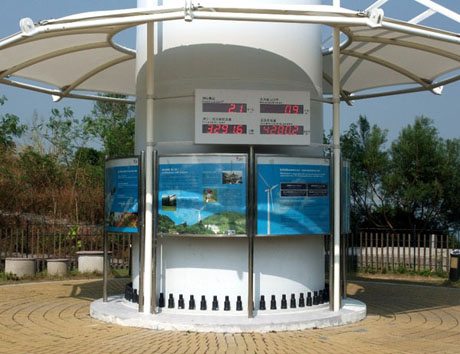
LAMMA WINDS – This single 800kw wind turbine operated by Hong Kong Electric was built in 2006 and is Hong Kong’s first commercial wind power station. It is prominently located at Tai Ling, high on the north-east side of the island. At the base is an exhibition centre and instrument displays from which the real-time performance can be observed. The station is open to the public daily from 07-00 to 18-00 and admission is free. To get there follow the family trail (described above) from Yung Shue Wan towards Sok Kwu Wan. Where the trail crosses a wide concrete service road (just before Lamma Police Post) follow this road uphill and Lamma Winds is right at the top. The walk from Yung Shue Wan Ferry Pier takes about 40 minutes.
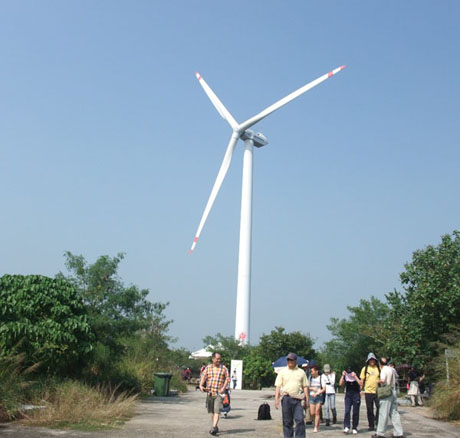
Lamma Winds is a popular destination for weekend walkers


Lamma Winds has a small visitor centre with instrument displays and picnic area

source by  http://www.hongkongextras.com/lamma_island.html
Read More
      edit

Tuesday, November 15, 2016

Published 11:18 PM by with 0 comment

Apprentice jockey Jack Wong breaks ankle in dramatic fall at Happy Valley

Apprentice jockey Jack Wong breaks ankle in dramatic fall at Happy Valley

The apprentice faces a lengthy stint on the sidelines after the nasty incident, while Umberto Rispoli was taken to hospital for observation after being flipped out of his saddle in the carnage

A nasty fall rounding the home turn at Happy Valley on Wednesday night left top apprentice Jack Wong Ho-nam with a suspected fractured left ankle but Umberto Rispoli suffered no obvious injury despite a spectacular airborne somersault into the track.
Wong’s mount Dashing King, who perished as a result of the fall, clipped heels as the pace quickened approaching the home straight and went down, and Rispoli’s ride, Mr Pele, fell over the top of the fallen horse, hurling Rispoli into the air.
Both riders were conscious when transported back to the jockeys’ room but Wong was taken immediately to hospital where the fracture was revealed, while Rispoli was initially treated in the Happy Valley first aid area and reportedly clear of serious injury before he also headed to hospital for tests.
An inquiry into the fall will be held when all jockeys are available to give evidence.


The crash took all attention from the winner of the race, Packing Dragon, who backed up from his win 10 days earlier and became significant as the 45th winner for apprentice Kei Chiong Ka-kei, reducing her allowance now to only five pounds.
“She rode him just right,” said trainer Ricky Yiu Poon-fai. “I told her just let him do his thing early, don’t use him too much and she was able to get the lead easily tonight from the good draw. And she got moving early too, which is the way to ride a stayer.”


But Douglas Whyte took Jockey Challenge honours on a countback over Joao Moreira and offered up the ride of the night to score on Sharp Hunter for the in-form David Ferraris in fourth race.
“You can ride them like that when you have a bit of confidence in the trainer and he has the confidence in you,” Whyte said. “David told me to ride the horse how I liked, I told him exactly what I was going to do – take Sharp Hunter back at the start, find the rail and ride him for luck. It worked out perfectly and then there was a gap outside the leader in the last 200m that was getting a little bit tight by the time I got there, but I had the confidence the horse would go through it and he did. And that’s what happens when a trainer has his horses going as well as David’s team is at the moment.”


Ferraris’ recent seasons since the move to the Olympic stables peaked at 21 wins for a full term but last night’s double took him to nine for the current term after just 19 meetings and he said the addition of an equine pool for the Olympic stables had “made a world of difference”.
“What we had to go through before to get horses to and from the pool at the other end of Sha Tin was terrible – now the pool is 30 yards away,” he said. “And I also have horses that have dropped to a good handicap rating after an unsuccessful season like last year. For a horse like Sharp Hunter, it was just a case of getting some confidence from his last win after he hadn’t won for a long time and he was able to hold that form.”
Ferraris said the case was different for Breeders’ Star (Moreira), who led home a quirky quinella in the following race when the two runners from the void race two weeks ago – Breeders’ Star and Buddy Bundy – filled the first two placings.


“Breeders’ Star gets a bit hot and excited and I’m sure he can compete in Class Three if he can calm down,” he said. “He was better tonight but still not perfect yet.”
Whyte later added Verbinsky for Tony Cruz in the final race to score a pair on the night, while trainer Danny Shum Chap-shing also took home a double. Sam Clipperton was ‘Johnny on the spot’ to pick up Wong’s ride in the race after the fall, replacing the apprentice on Extremely Fun to win for trainer Peter Ho Leung.
Meanwhile, Matthew Chadwick copped a two-meeting suspension for his ride on Charity Joy in the last race. He’ll be out of action on November 30 and December 4.

source by  http://www.scmp.com/
Read More
      edit

Sunday, November 13, 2016

Published 8:34 AM by with 0 comment

SYSTEM DOSSIER: NGONG PING 360 CABLE CAR (HONG KONG)

SYSTEM DOSSIER: NGONG PING 360 CABLE CAR (HONG KONG)

                                                 Image by Flickr user Alexander Savin

Over the last half century, Hong Kong has established itself as one of the world’s leading financial centers and is continually ranked as one of the best places to start a business. However, there is more to the city than just skyscrapers and business.

This dynamic and vibrant metropolis is a fusion of many cultures. Evidence of the city’s colonial roots is seen throughout – seamlessly mixed with Chinese tradition. From the exciting world-class shopping and cuisine to the scenic views of the city’s iconic skyline, it’s no surprise that Hong Kong is such a desired international destination.

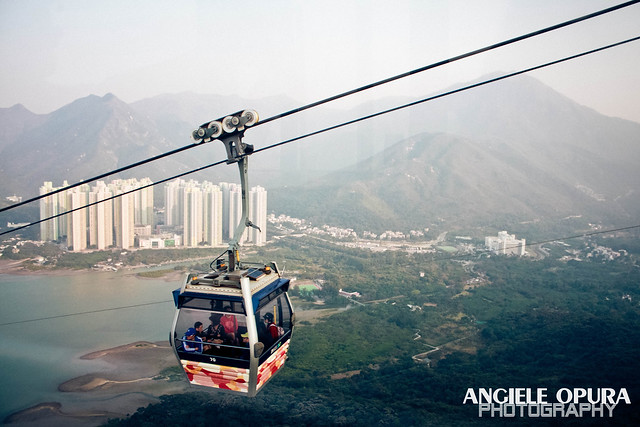
                                              Image by Flickr user Angiele Mae Opura

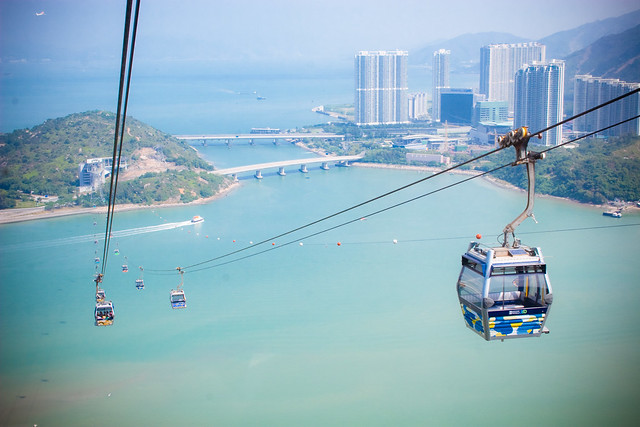
Adding to its appeal, the Ngong Ping 360 cable car was opened in 2006 and has been one of Hong Kong’s most popular excursions (attracts over 1.6 million riders annually). The Leitner-built Bicable Detachable Gondola (BDG), transports passengers from Tung Chung station to Ngong Ping Village located on Lantau Island.

Tourists and locals alike can easily access the cable car by taking the MTR’s Tung Chung Line – a rapid transit system – to Tung Chung. From the rail station, passengers can purchase a separate fare and board the cable car. For an additional cost, riders have the option of upgrading their experience by boarding one of the VIP “Crystal Cabins”, complete with glass floors.

                                                                 Image by Bridgette Lo

The initial portion of the cable car’s journey is a short crossing of Tung Chung Bay to Airport Island Angle Station – where the gondola makes a 60-degree turn. The gondola then proceeds to ascend over Tung Chung Bay again to Lantau Island where the gondola reaches its terminus station, Ngong Ping.

During this 25-minute journey, riders can enjoy panoramic views of the North Lantau Country Park, the South China Sea, the Tung Chung Valley, the Tian Tan Buddha statue, Hong Kong International Airport, Nei Lak Shan, and surrounding terrain and waterways. At Ngong Ping Village, tourists can indulge in a variety of shopping and dining experiences. Of course, one must not forget to check out the international cable car gallery, which exhibits cable car replicas from all over the globe.

source by  http://gondolaproject.com/2016/11/08/
Read More
      edit

Wednesday, November 9, 2016

Published 9:58 AM by with 0 comment

The Ten Best Street Markets in Hong Kong

The Ten Best Street Markets in Hong Kong

Everybody knows Hong Kong is a shopping paradise, and even a hyperbolic overview would be hard-pressed to exaggerate what a local shopping spree has to offer. It’s also sinfully cheap to stock up on gifts at the markets (but let’s get real, you’ll end up keeping most of the purchases for yourself). From knock-offs to goldfish, shoppers can find everything they didn’t know they wanted, and in the process, sharpen their haggling skills. And don’t worry about buying too much, since there will probably be a stall nearby selling suitcases.

While you’re shopping, don’t miss the opportunity to sample some of Hong Kong’s renowned street food. Each neighborhood will have their own street food gems to discover, while the area around the Mong Kok markets has an especially plentiful number of street food stalls.

10. Temple Street Night Market, Jordan

When other markets start to wind down, head over to Hong Kong’s largest night market, where the fun’s just beginning. Arrive after 7 p.m. to browse through the several blocks of pirated CDs and DVDs, knock-off bags, electronics, kitchen supplies and souvenirs. The market stays open till about midnight, but break up the shopping with dinner at a seafood restaurant behind the stalls, a visit to an English-speaking fortune teller or a viewing of an impromptu street performance.

          Some of the wares on sale at the Temple Street Night Market. Photo credit Martin Moscosa.

9. Stanley Market, Stanley

More upscale and mostly covered, Stanley Market can easily eat up the rest of the day after sunbathing at the adjacent beach. Established shops sell paintings by local artists, knick-knacks, silk clothing, toys, mahjong sets more. Many shops offer a range of larger sizes (a rarity elsewhere). Although the prices aren’t the cheapest, many proprietors will offer discounts without being aggressive, making it a nice starting point for visitors unfamiliar with Hong Kong’s more in-your-face style of haggling.

The Stanley Market, on the southern side of Hong Kong Island, is a great place to shop for souvenirs or beachwear.

8. Costume Market, Central

Smack in the middle of Central along Pottinger Street, this market is the mother lode for those who love to play dress up. full of wigs, feather boas and sequined and spangled masquerade masks all year long.

                A look at the Costume Market on Central’s Pottinger Street. Photo credit yeowatzup

7. Sai Kung Seafood Market, Sai Kung

In the afternoon, local fishermen pull up to the Sai Kung pier to sell their fresh catches. Rather than a floating market, this is more of an elevated one, as customers lean over the rails, make their requests, and the fishermen send up the seafood to street level via bucket.


 A customer receives his order and places the money in the net at the Sai Kung Seafood Market. Photo credit Connie

6. Goldfish Market, Mong Kok

While not technically a market, these shops filled with sea creatures are an excellent example of the local market culture. Tiny goldfish in plastic bags sell from HK$12 and large fish in correspondingly large bags go for upwards of HK$2,000. Crowds tend to hover around aquariums filled with adorable turtles. Aquariums, underwater plants and all kinds of plastic, neon-hued marine flair are stacked precariously on the sidewalks. A cuddly intermission in the form of a pet store filled with puppies and kittens simply adds to the cute overload.

           The Goldfish Market is exactly what it sounds like, a market that primarily sells gold fish.

source by  http://www.travelersdigest.com/6425-ten-best-street-markets-in-hong-kong/
Read More
      edit
Published 9:25 AM by with 0 comment

Hong Kong Memories 5: Temple Street Night Market

Hong Kong Memories 5: Temple Street Night Market

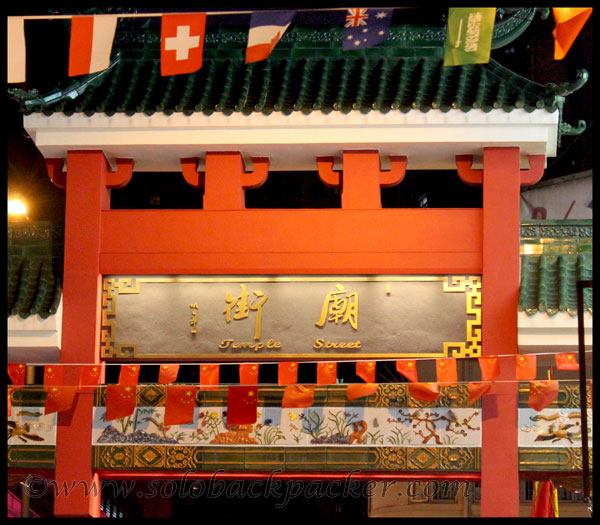
Hong Kong is indeed a shopper’s paradise. Its mega malls, incredible branded stores and neon glowing sign boards offer an amazing shopping experience to the travelers. But the fact remains is that, by the Asian Standard, Hong Kong is really an expensive destination. If you enjoy those malls and stores without thinking about your money, you will surely end up by too much expenses. This post is not about the mega malls and grand stores. This is about the most famous street market in Hong Kong, where you can spend your money on an enjoyable shopping experience. The items are of course not the branded one because its merely a local market, but still the product range available here is amazingly good to make this market a hot favorite among the locals as well as the foreign backpackers.

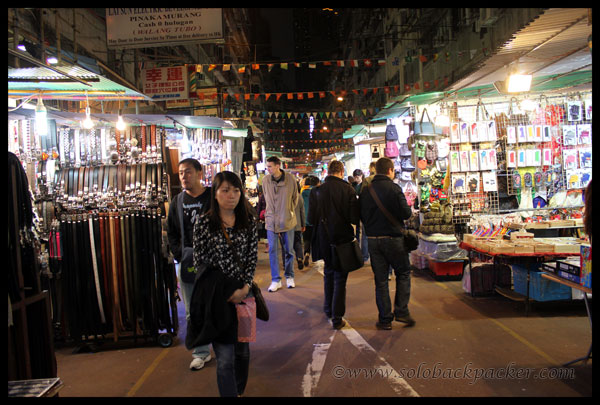
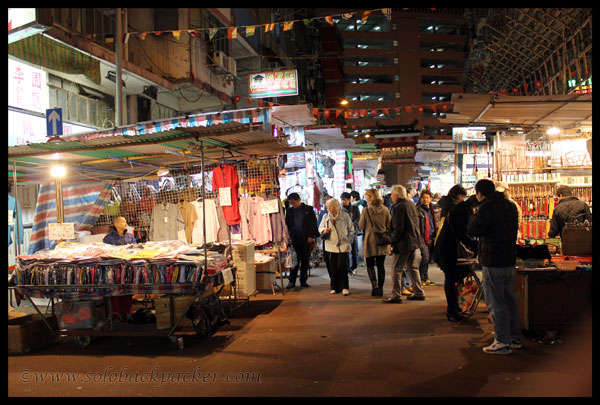
The Temple Street Night Market is located in Kowloon Island near Nathan Road.The market is located in the districts of Jordan and Yau Ma Tei. In the day time it is a busy road like other roads in Hong Kong packed with cars and other shops.But at 4 PM, the street starts taking a new shape, then cars disappear off the road and local vendors move in, erecting their steel, canvas and plastic tent-like stalls. They mainly used plastic tents to protect the stalls and items from any sudden downpour. By 7 PM, this market becomes alive with lots of people from different countries, different cultures and different backgrounds to prove Hong Kong as Asia’s World City.
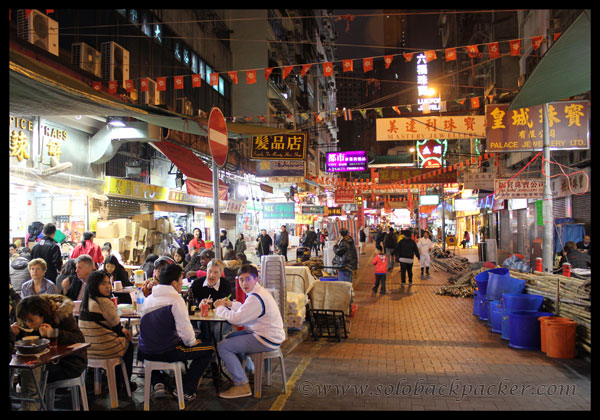
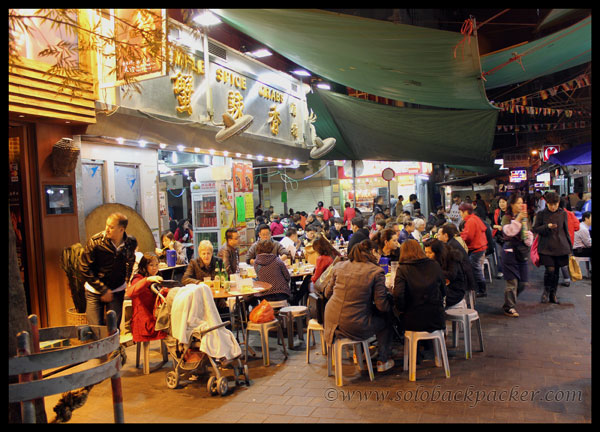
While coming from the Nathan Road or Jordan MRT Station, You first come across a series of food stalls,jam packed with locals mainly. This a great place to try some inexpensive local food before bargaining hard with vendors in the street market. The menu is mostly written in Cantonese, so please make sure whatever you are ordering. Do not expect a vegetarian item, even vegetarian item can be a non-vegetarian. You may find many unrecognizable sea creatures and insect in the order menu. If you find them delicious, you can move ahead with your order.

                                             Food Stalls @ Temple Street Night Market

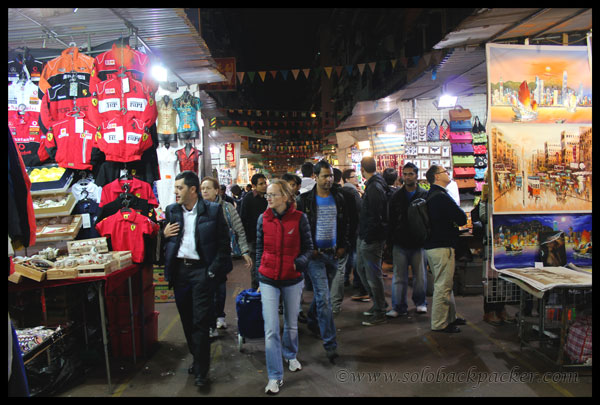
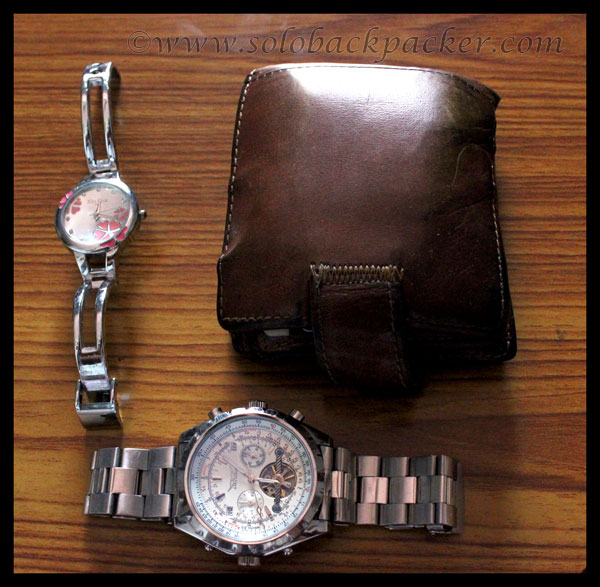
The market is also known as “Men’s Market” as it targets male customers and offers a huge range of products for them.It is a place for clothes, watches,leather goods, DVDs, toys,footwear, artworks, mobiles, goggles etc. Be prepared to bargain and always bargain hard. In my case, for a leather valet, the vendor quoted a price of 500 HK Dollars, but I bargained it to 100 HK Dollars with an additional fancy watch for my wife.

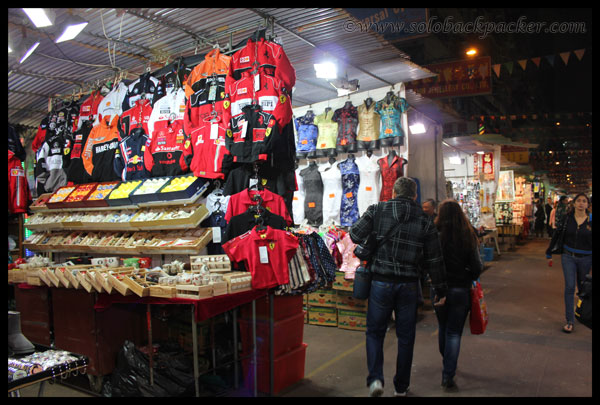
                   A stall with jackets and another one with paintings@ Temple Street Night Market

The market is illuminated by many blazing incandescent bulbs and music coming out from CDs shops making whole atmosphere very colorful.

                                              Various stalls@Temple Street Night Market

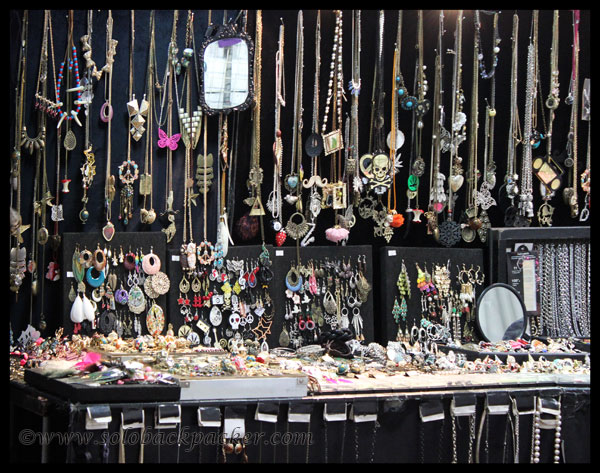
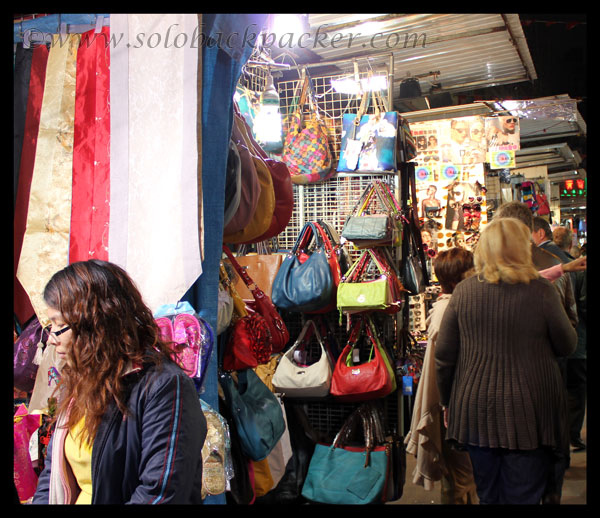
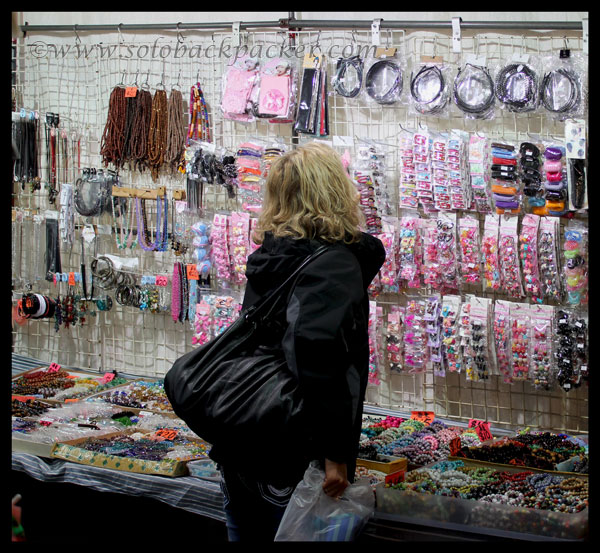
Accessories: Lot of accessories like purse, valet, bags, ear rings, sunglasses etc are available in this market.They might have bearing the branded name like GUCCI or Ray Ban,but those products are certainly not the genuine one. They looks good and also work good for a considerable period of time, but do not expect more from these products, even if you spend some HK Dollars to buy them.

                                       A stall selling Accessories@ Temple Street Night Market

                                    A stall with ladies purse @ Temple Street Night Market

                                    Another accessories shop @ Temple Street Night Market

                                               Various Stalls@ Temple Street Night Market

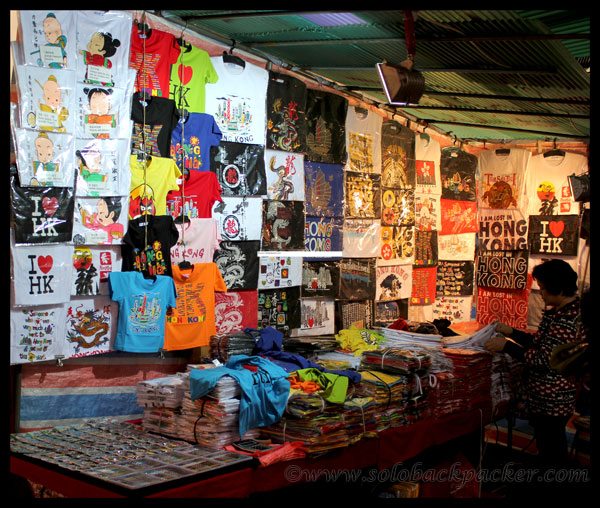
Clothes: You can buy lot of clothes at street market and any kind of-be it for kid’s, men’s or women’s. Plenty of stalls with cheap T-shirts, jackets, jeans, skirts, tops are available here. Again, bargain hardly before buying anything. Mostly, T-shirts prices are fixed, so don’t expect much bargain on them. Do not expect changing rooms to try the clothes, unless it is a proper shop. Street Vendors do not offer changing rooms.

                                A stall with HK-specific T-shirts@ Temple Street Night Market

                                               A jacket stall@ Temple Street Night Market

Mobiles,Notepads and other Electronic Items: These items are also available in plenty at this market. But again there is no warranty and guarantee. The i-pads and i-phone like mobiles are very cheap in the street market. I am not sure about the quality, but when I asked my hotel receptionist about those items, he informed that in HK, those items are very popular and local people like them more than branded name like Nokia. You can also find plenty of pirated DVDs of software, movies etc in the market.

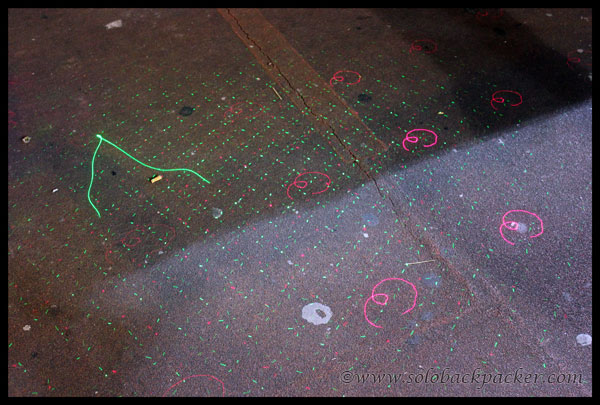
                     A laser selling stall showing lights at the ground@ Temple Street Night Market

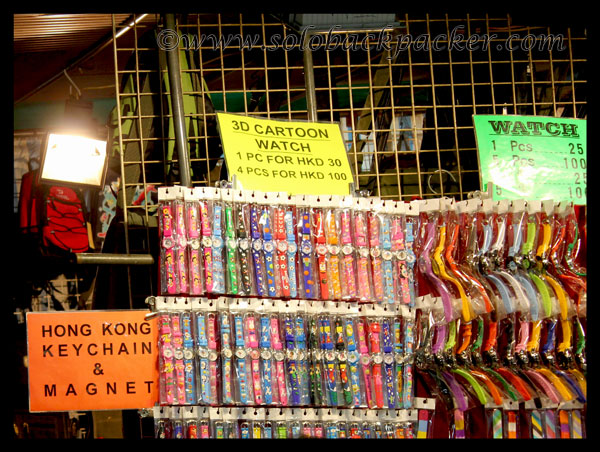
                                  Watch, Keychain and Magnet@ Temple Street Night Market

Fortune Teller Shops: There are also many shops in this street to tell you about your fortune based on the Chinese zodiac, Feng-shui and taro cards. They can also tell you some interesting idea to turn your fortune, of-course for the money. For fun, you can always enjoy their services, but don’t take them seriously.

                                             Purchased Items @ Temple Street Night Market

and at last, this market is also famous for the prostitutes. You will find them in parking areas and at street corners, trying to look casual in their short clothes. They are priced according to ethnicity..least expensive from Thailand and Phillipines, while the most expensive from Russia. While you walk along the market, chances may come (especially if you are an Indian), when you will be approached by an Indian and that great guy ask you whether you want to buy a watch or something else. If you deny, then his next question would be related to hiring a prostitute for the night. Just laugh and move further.Just for your information, prostitution is legal in Hong Kong, but public solicitation is against the law.So, except some police deployment also in the area.

After all these hustle and bustle if you start feeling hungry, then you can again turn to those inexpensive food stalls at the beginning of the market.

                                             Enjoying Foods@ Temple Street Night Market

Next day morning, don’t be surprise by the changed behaviour of Temple Street. You will find no stalls, no vendors and no prostitutes till the evening.It will look like any other market in Hong Kong. This happens daily at temple street. It only comes alive after 7 PM.

Opening Hours: Market starts from 4 PM, but come alive only after 7 PM daily. Most stalls close between about 11-30pm and midnight.

 How to Reach Temple Street: This is conveniently located in the heart of Kowloon, just 2-3 minutes on foot from the Jordan MTR station. Take the MTR and get to the Jordan station. Get out of the station through Exit A and turn right. Walk 150 meters along the Jordan Road and then turn right to the market.

MTR Yau Ma Tei Station, Exit C, turn onto Temple Street at Man Ming Lane.

By Bus: From Star Ferry Pier in Tsim Sha Tsui, catch any of these buses no. 1,1A,2,6,6A ,7 or 9 and leave the bus at bus stand next to Jordan MTR Station or at MTR station itself and then 5-10 minutes walk to temple street.From Star Ferry Pier, these buses move along Salisbury Road, Nathan Road, from in front of Chung King Mansion towards the Jordan MTR Station. Travel time is about 20-25 Minutes. Alternatively, you can also walk along the Nathan Road to Temple Street.

Read More
      edit